


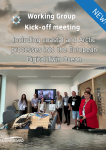
On 22-23 September 2026, the new EMB Working Group on "Including coastal and Arctic processes into the European Digital Twin Ocean" met for the first time during the kick-off meeting held at the InnovOcean site in Ostend (Belgium) and online. The meeting was chaired by Joanna Staneva from Helmholtz-Zentrum Hereon in Germany and Lőrinc Mészáros from Deltares in the Netherlands.
News
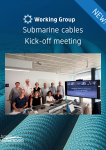
On 8 September 2026, the kick off meeting was held for the new EMB Working Group on 'Submarine Cables: A Revolution in Ocean Monitoring' at the IMREDD - Université Côte d'Azur in Nice, France hosted by the Chair of the Working Group, Dr Anthony Sladen.
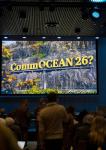
The 7th CommOCEAN conference took place on 2–3 September 2026 in Bergen, Norway, bringing together Ocean scientists, science communicators and other professionals to explore the role of communication in supporting Ocean sustainability.
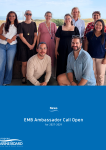
EMB is looking for two enthusiastic, engaged, and creative early career marine scientists to join their Ambassador Programme. The Ambassadors will play an important role in advocating for EMB and promoting the societal and political relevance of all aspects of the Ocean and marine sciences, including natural sciences, social sciences, policy, and humanities, within their own communities, and to a wide diversity of stakeholders in Europe. The two new Ambassadors will collaborate and liaise with our current Ambassadors and recent Alumni to share experiences and ideas, and work on activities together. They will also ensure the continuation of the EMB ECOP Network.
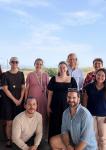
On 4-5 August 2026, three of EMB's Ambassadors joined the EMB Secretariat at their offices in Ostend, Belgium for a two-day training workshop.
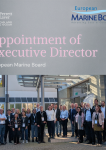
EMB is working with international executive search firm Perrett Laver to recruit a new Executive Director.

On 25 June 2026, EMB was awarded a Platinum Facilitation Impact Award - the highest category of award possible - from the International Association of Facilitator (IAF) for the workshops we conducted under the Horizon 2020 funded EcoScope project.
The European Marine Board (EMB) Secretariat will be participating in the Cyprus Presidency event "Riding the Wave: Advancing the EU Ocean Pact through Science, Innovation and Cooperation" and the European Maritime Day during May 2026. Both events will take place in Cyprus, and will bring together scientists, policymakers and stakeholders.
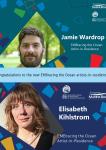
We're delighted to announce the newly selected artists-in-residence for the 2026 - 2027 edition of the EMBracing the Ocean programme!
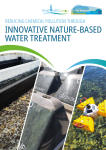
Today, the European Marine Board published the RHE-MEDiation Policy Brief during the Marine Shield Cluster Webinar. The document highlights the untapped potential of microalgae-based photobioreactors as an innovative and nature-based solution to support the implementation of the revised Urban Wastewater Treatment Directive (UWWTD), particularly for rural and remote municipalities across Europe.