


Impact report for Position Paper No. 28, which highlights the role of the Ocean in the global Earth system, and proposes recommendations on marine research needs to support our understanding of this system and global challenges.
EMB publications
Impact report for Future Science Brief 11, which highlights current methods and future trends in the acquisition of data for habitat mapping, recommendations for adopting fit-for-purpose habitat classification schemes and to increase the quality and resolution of marine habitat maps, priorities for habitat types and geographic coverage for future mapping efforts, and ways to make maps more easily accessible to increase their value.
Biomolecular approaches, including -omics and eDNA, are increasingly important in Ocean observation. Combined with traditional methods, these can create ‘augmented observatories’, providing high-resolution insights into biodiversity and ecosystems to support conservation and ecosystem-based management. Future Science Brief 14 on 'Biomolecular approaches to observe and manage marine life' provides recommendations for advancing and scaling-up biomolecular tools to support marine management and policy.

EMB engaged in a wide range of marine science-policy activities throughout 2025. These included the publication of the Future Science Briefs on 'Deep Sea Research and Management Needs' and on 'Monitoring, Verification and Reporting of mCDR', organisation of the 9th EMB Forum, and engagement in a number of externally funded projects. EMB maintained its support for the UN Ocean Decade, including the EMBracing the Ocean artist-in-residence programme, and for the EU Mission Ocean. It also continued to support early career researchers via the EMB Ambassador Programme and ECOP Network. To learn more about EMB’s activities and achievements, read EMB's 2025 Annual Report.
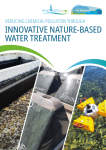
This Policy Brief presents the main policy-relevant outcomes from the RHE-MEDiation project and provides recommendations to help modernise wastewater treatment and enable uptake of the approach tested during the project. It also highlights the untapped potential of microalgae-based photobioreactors as an innovative and nature-based solution to support the implementation of the revised Urban Wastewater Treatment Directive (UWWTD), particularly for rural and remote municipalities across Europe. This document was developed by the European Marine Board Secretariat, in collaboration with partners from RHE-MEDiation project.

The Joint SURIMI - Advisory Councils (ACs) workshop was an additional workshop held after the first SURIMI stakeholder co-design workshop, aimed to increase the awareness and involvement of European fishers for whom English was a barrier to participate in the first workshop. This report provides a summary of the workshop and main findings.

This Policy Brief summarises the key policy-relevant results and tools developed by the BRIDGE Black Sea (BRIDGE-BS) project, and makes recommendations for future research and policy needs for the future for the development of a sustainable blue economy within ecosystem boundaries. The tools developed aim to predict the long-term impact and emerging risks from multiple stressors to identify a safe operating space within which a sustainable blue economy can flourish. This document was developed and published by the European Marine Board Secretariat, in collaboration with researchers from the BRIDGE-BS project.

Marine Carbon Dioxide Removal (mCDR) methods are being proposed and piloted in Europe. Monitoring, Reporting and Verification (MRV) is a structured process to collect, disclose and independently verify data on mCDR activities. The EMB Future Science Brief No. 13 ‘Monitoring, Reporting and Verification for marine Carbon Dioxide Removal' aims to identify knowledge gaps, challenges and uncertainties in developing transparent and standardised MRV systems for mCDR methods and provides recommendations on how to overcome them. It addresses the need for science-based guidance for developing robust, transparent and scientifically underpinned MRV frameworks for mCDR going forward.

Impact report for Future Science Brief 10, which highlights the most recent science on Ocean oxygen, including causes, impacts and mitigation strategies of Ocean oxygen loss, and whether “every second breath we take comes from the Ocean”.

Impact report for Future Science Brief 9, which provides an overview of the technology and European deployment status in the offshore renewable energy sector, and discusses the environmental and socioeconomic considerations, and key knowledge, research, and capacity gaps that must be addressed to ensure sustainable delivery of the EU Green Deal.