


Output
An EMB Position Paper on "Submarine cables: A revolution in Ocean monitoring" is expected in 2027.
Background
The use of fibreoptic submarine cables for science and Ocean observations was proposed for the first time in 2010. Recent advances in optical and sensor technology have made it possible for these cables to improve Ocean monitoring with additional in situ seabed sensors. This can include the retrofitting of relevant technologies to currently active or now obsolete telecommunications cables, or the addition of specific technologies to newly laid cables.Ocean observing using submarine cables offers the opportunity to acquire data covering a broad range of applications, including physical oceanography (e.g. pressure, temperature), seismic activity and geohazards detection, and acoustics. The data gathered will be useful for a wide range of applications, from marine geohazard early warning systems to climate change monitoring and acoustic observations of marine species. The data can also contribute directly or indirectly to the Global Ocean Observing System (GOOS) and Essential Ocean Variables (EOV).
The policy drivers for the development of submarine cable for Ocean monitoring are broad. The newly announced European Ocean Pact will rely heavily on Ocean observations for its support and implementation, including in a dedicated European initiative to bring greater coherence to the European observing landscape. The implementation and management of other existing instruments also rely on parameters which submarine cables can measure, such as the Nature Restoration Regulation (e.g. hydrological changes related to climate change) and the Marine Strategy Framework Directive (e.g. related to hydrographical conditions and underwater noise). More widely, the data will support protection from marine geohazards and climate-driven hazards and support resilience ambitions.
This working group provides input to the UN Decade of Ocean Science for Sustainable Development (2021-2030) Challenges on increasing community resilience to Ocean and coastal risks, sustainably expanding the Global Ocean Observing System, and creating a digital representation of the Ocean.
Working group objectives
An EMB activity on this topic will seek to provide a comprehensive state-of-the-art overview regarding the use of submarine cables for Ocean monitoring. It will consider use of now obsolete, active and new underwater telecommunications cable for this purpose. It will also discuss the ways in which the data could be used in support of marine scientific research, disaster risk reduction, policymaking and maritime security.
Specific topics that could be addressed in this document include (but are not limited to):
- Highlight Ocean monitoring opportunities offered by different types of sensors and technologies applied on submarine and underwater cables, and the potential uses of the acquired data;
- Briefly present the different sensing technologies that can be used to conduct Ocean observation with submarine cables, and their respective advantages and disadvantages;
- Present the practical requirements relating to deployment and maintenance of the cables as well as other pertinent practical aspects;
- Consider the environmental and social implications of deploying and using submarine cables for Ocean monitoring;
- Discuss the legal implications of using submarine cables for Ocean observing and data acquisition, as well as the sharing and use of the acquired data;
- Discuss the related maritime defence and security considerations linked to submarine cables, both in terms of infrastructure protection but also threat detection;
- Proposed research and policy recommendations to further the development of submarine cable technology and its use in Ocean observing.
The Terms of Reference of the EMB Working Group is available here.
Meetings
- Introductory meeting - 29 June 2026
- Kick-off meeting - 8 September 2026
Working Group Members
Chair: Anthony Sladen, CNRS - Géoazur - Université Côte d'Azur - Observatoire Côte d'Azur, France
Co-Chair: Luciana das Neves, CIIMAR, Portugal
- Chris Bean, Dublin Institute for Advanced Studies (DIAS), Ireland
- Giuseppa Buscaino, CNR-ISMAR, Italy
- Michael Clare, National Oceanography Centre (NOC), UK
- Juanjo Danobeitia, Consejo Superior de Investigaciones Cientificas (CSIC), Spain
- Isabel Iglesias Fernandez, CIIMAR, Portugal
- Martin Landrø, Norwegian University of Science and Technology (NTNU), Norway
- Tobias Liebetrau, University of Copenhagen, Denmark
- Nele Matz-Lück, Kiel University, Germany
- Hrvoje Mihanović, Institute of Oceanography and Fisheries (IOF), Croatia
- Jens Schneider von Deimling, Kiel University, Germany
Contact at European Marine Board Secretariat: Paula Kellett Email
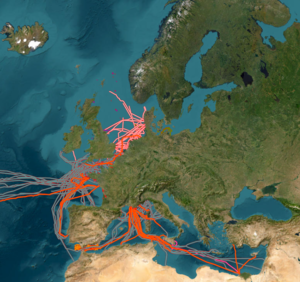
Image: Telecommunications cables in Europe. Credit: EMODnet