


Project type: | EU H2020, Topic: BG-08-2014 Call: H2020-BG-2014-2 |
Duration: | 51 months (1 April 2015 – 30 June 2019) |
Budget: | €20,652,923 |
Consortium: | 62 partners including international partners in USA, Canada, South Africa |
Coordinator: | GEOMAR, Kiel, Germany |
Website: | |
EMB role: | Co-lead of WP 10 “Engagement, Dissemination and Communication” |
The official AtlantOS film (produced by the AtlantOS Project)
Background and Objective
 The overarching objective of AtlantOS was to achieve a transition from a loosely coordinated set of existing ocean observing activities to a sustainable, efficient, and fit-for-purpose Integrated Atlantic Ocean Observing System, by defining requirements and systems design, improving the readiness of observing networks and data systems, and engaging stakeholders around the Atlantic. Furthermore AtlantOS aimed to leave a legacy and strengthened contribution to the Global Ocean Observing System (GOOS) and the Global Earth Observation System of Systems (GEOSS). AtlantOS filled existing in situ observing system gaps and ensured that data were readily accessible and useable. AtlantOS demonstrated the utility of integrating in situ and Earth observing satellite based observations towards informing a wide range of sectors using the Copernicus Marine Monitoring Services and the European Marine Observation and Data Network and connected them with similar activities around the Atlantic. AtlantOS supported activities to share, integrate and standardize in situ observations, reducing the cost by network optimization and deployment of new technologies, and increasing the competitiveness of European industries, and particularly of the small and medium enterprises of the marine sector. AtlantOS promoted innovation, documentation and exploitation of innovative observing systems. All AtlantOS work packages strengthened the trans-Atlantic collaboration, through close interaction with partner institutions from Canada, United States, and the South Atlantic region. AtlantOS developed a results-oriented dialogue with key stakeholder communities to enable a meaningful exchange between the products and services that the Atlantic Ocean Observing System can deliver and the demands and needs of the stakeholder communities. Finally, AtlantOS established a structured dialogue with funding bodies, including the European Commission, USA, Canada and other countries to ensure sustainability and adequate growth of the Atlantic Ocean Observing System.
The AtlantOS vision was to create together with the ocean community a coordinated, efficient, sustainable and purposeful system. The legacy of AtlantOS is a BluePrint for Atlantic Ocean Observing, an implementation plan beyond the EU funding period, which is under development with the wider international Atlantic ocean observing community. EMB were contributing authors to a European Strategy for Atlantic Ocean Observing which was developed as a contribution to the BluePrint. This included a workshop on 4-5 June 2018 in Brussels and EMB contributions on European Policy Drivers for ocean observation and ocean observation governance and stakeholder engagement.
Learn more about AtlantOS in this short video.
European Marine Board Role:
- EMB was a co-leader of Work Package 10 “Engagement, Dissemination and Communication” (WP10 was led by KDM; Jan-Stefan Fritz)
EMB had a specific Task (10.6) on ocean observing policy and coordination developments. EMB also supported wider WP10 activities, including development of the AtlantOS Engagement Strategy. This role also involved our representation (Kate Larkin) on the AtlantOS Steering Committee and Executive Board.
Under this task, EMB delivered a strategic foresight paper on AtlantOS in the European context (Deliverable 10.11). This paper looks at the marine science - policy landscape and brings together different policy discussions aimed at the development of a European Ocean Observing System, in the context of AtlantOS, and how this relates to wider Atlantic and global policy drivers and existing and emerging wider ocean observation coordination. It has a European focus, looking at proposed mechanisms and components for ocean coordination and governance and the potential contribution of existing organizations and initiatives. The report serves as a reference document for, and contribution to, the European Strategy on Atlantic Ocean Observing and international BluePrint for an integrated Atlantic Ocean Observing System.
- EMB lead Task 10.6: IAOOS in the Context of a European Ocean Observing System
This task looked into current and emerging governance and coordination of ocean observing systems with a specific focus on the Atlantic Ocean (AtlantOS) and the European Ocean Observing System (EOOS) to strengthen coordination and alignment of Regional ocean observing systems. The report further developed the vision for an integrated and sustained ocean observing system as articulated in the publications of the European Marine Board, including the strategic foresight paper Navigating the Future IV (European Marine Board, 2013) and the joint EMB and EuroGOOS publication (2008) EMODnet: A vision for an end-to-end, integrated, interoperable and user-oriented network of European marine observation and data systems.
As part of this task, we also co-lead the development of a European Strategy for Atlantic Ocean Observing , as a European contribution to the BluePrint (AtlantOS and wider Atlantic Ocean Observing legacy).
Related to this, we also co-Chaired the European Ocean Observing System Steering Group which is led jointly with EuroGOOS. Read more about EMB's contribution to European Ocean Observing here and the EOOS website
Meetings
- AtlantOS Final meeting, 26-28 March 2019, IOC, Paris, France
- AtlantOS European Strategy workshop, 4-5 June 2018, Brussels, Belgium (EMB co-organizers)
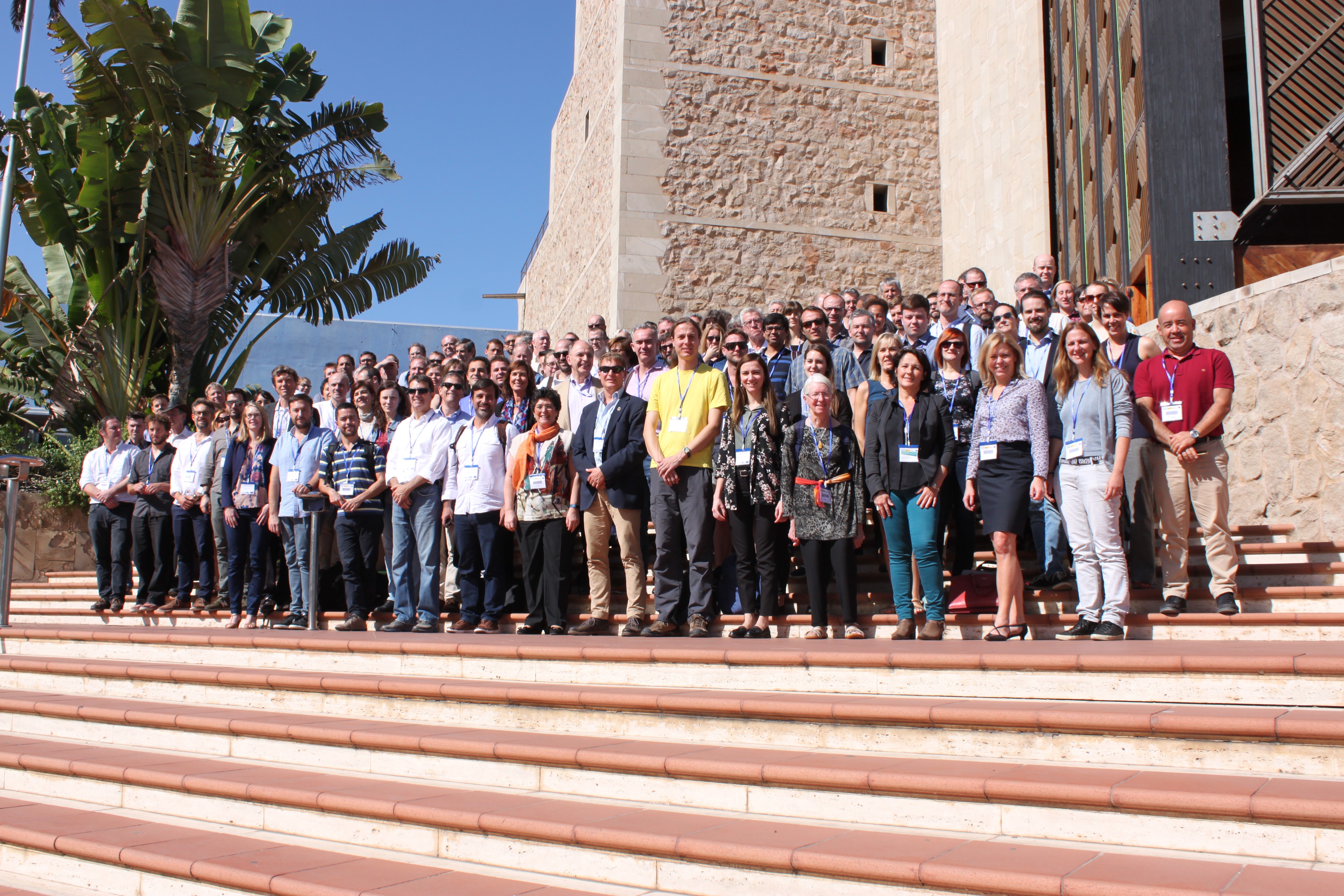
- 2rd annual meeting, 21-23 November 2017, Gran Canaria, Spain
- AtlantOS 2nd annual meeting, 28-30 June 2016, Kiel, Germany
- AtlantOS Kick-Off meeting, 10-12 June, Royal Library of Belgium, Brussels, Belgium
Press release: http://pr.euractiv.com/pr/improved-observations-better-understand-atlantic-128415
Contact at European Marine Board Secretariat: Email
 This project has received funding from the European Union's Horizon 2020 research and innovation programme under grant agreement No 633211